If you have ever applied for a grant, business competition, startup loan, fellowship, or investor funding, you have probably been asked to submit a business plan. For many first-time entrepreneurs, that request feels intimidating.
- Quick Summary
- Why a Business Plan Matters for Funding
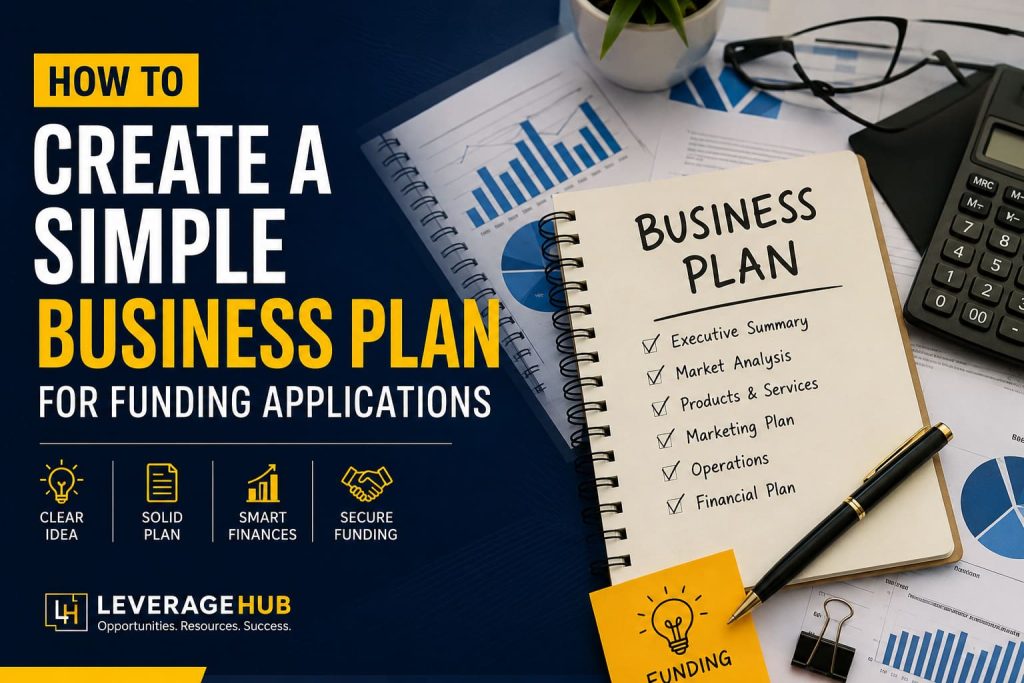
- How to Create a Simple Business Plan for Funding Applications
- 1. Business Summary
- 2. Problem and Solution
- 3. Target Customers
- 4. Products or Services
- 5. Marketing Plan
- 6. Operations Plan
- 7. Simple Financial Plan
- Step-by-Step Writing Process
- Practical Example
- Common Mistakes to Avoid
- What Funders Look For
- Recommended Free Resources
- Frequently Asked Questions
- Final Action Plan
- Conclusion
The good news is that you do not need a 40-page document filled with complicated financial terms. A simple, clear, and realistic business plan is often enough for many funding applications.
This guide will show you how to create a simple business plan for funding applications in a practical step-by-step format that beginners can follow. Whether you are starting a food business, fashion brand, online service, farm project, laundry business, or digital startup, the same structure can help you present your idea professionally.
Quick Summary
- Best option: A 2–5 page business plan
- Time required: 2–6 hours
- Cost: Free using Google Docs or Word templates
- Suitable for: Entrepreneurs, students, freelancers, and grant applicants
- Biggest mistake: Using unrealistic profit projections
Why a Business Plan Matters for Funding
Funders want to know three things:
- What your business does
- Who will buy from you
- How the business will make money
A simple business plan helps them understand your idea quickly and decide whether it is worth supporting.
How to Create a Simple Business Plan for Funding Applications
A beginner-friendly funding business plan usually contains seven sections.
1. Business Summary
Start with a short paragraph that explains:
- Business name
- Product or service
- Target customers
- Location
- Amount of funding needed
Example
BrightWash Laundry Services is a mobile laundry business serving students and working professionals in Lagos. The business seeks ₦1,500,000 to purchase washing equipment, delivery bags, and marketing materials.
Keep this section under 150 words.
2. Problem and Solution
Explain the problem your customers face and how your business solves it.
Problem
- Long laundry queues
- Expensive delivery services
- Lack of affordable healthy meals
- Limited tutoring options
Solution
- Pickup-and-delivery laundry service
- Lower delivery fees
- Healthy meal subscriptions
- Online tutoring sessions
Focus on a real problem people already experience.
Also Read: How to Write a Winning Grant Proposal
3. Target Customers
Describe your ideal customers.
| Question | Example |
| Age group | 18–45 |
| Occupation | Students, workers, parents |
| Location | Lagos mainland |
| Income level | Middle income |
| Main need | Convenience and affordability |
Avoid saying “everyone is my customer.”
4. Products or Services
List what you sell and the price.
| Service | Price |
| Wash and iron (5kg) | ₦3,000 |
| Pickup and delivery | ₦1,000 |
| Monthly laundry plan | ₦18,000 |
Mention any competitive advantage such as faster delivery, better quality, or online ordering.
5. Marketing Plan
Explain how customers will find you.
- WhatsApp Business
- Instagram or Facebook
- Referral program
- Flyers in nearby estates or campuses
- Google Business Profile
- Partnerships with hostels or offices
Choose 2–4 realistic channels rather than listing every platform.
6. Operations Plan
Describe how the business will run daily.
Example Workflow
- Customer places an order on WhatsApp.
- Clothes are picked up within 24 hours.
- Washing and ironing are completed.
- Items are packaged and delivered.
- Payment is collected.
This shows that you have thought through the practical side of the business.
7. Simple Financial Plan
Startup Costs
| Item | Amount (₦) |
| Washing machine | 600,000 |
| Iron and table | 120,000 |
| Delivery bags | 80,000 |
| Branding and flyers | 100,000 |
| Working capital | 600,000 |
| Total | 1,500,000 |
Monthly Estimate
| Item | Amount (₦) |
| Expected sales | 450,000 |
| Expenses | 250,000 |
| Estimated profit | 200,000 |
Use conservative estimates. Realistic numbers build trust.
Step-by-Step Writing Process
- Step 1: Open a blank document: Use Google Docs, Microsoft Word, or Canva Docs.
- Step 2: Add the seven headings: Copy the headings from this article.
- Step 3: Write one paragraph under each heading: Do not aim for perfection in the first draft.
- Step 4: Add numbers: Include startup costs and expected monthly sales.
- Step 5: Edit for clarity: Keep sentences short and easy to read.
- Step 6: Save as PDF: Most funding applications prefer PDF format.
Practical Example
Ada’s Home Catering Business: Ada prepares healthy lunch packs for office workers in Abuja.
Funding Needed: ₦800,000
Use of Funds
- Cooking equipment: ₦300,000
- Food containers: ₦150,000
- Initial ingredients: ₦200,000
- Branding and delivery setup: ₦150,000
Expected Monthly Sales
- 100 lunch packs × ₦2,500 × 20 working days = ₦5,000,000 gross sales
- After food, transport, and staffing costs, Ada estimates a monthly profit of ₦1,200,000.
- Because she clearly explains her customers, pricing, and expenses, a reviewer can easily understand the business.
Common Mistakes to Avoid
- Writing Too Much: A beginner business plan does not need 20 pages.
- Unrealistic Sales Projections: Avoid claiming huge profits without evidence.
- Ignoring Competitors: Mention a few alternatives customers currently use.
- Requesting Funding Without a Budget: Always explain exactly how the money will be spent.
- Copying Templates Word for Word: Personalize every section.
- Using Complex Jargon: Use simple business language.
- Forgetting Contact Information: Include your name, phone number, email, and location.
What Funders Look For
Before submitting, check whether your plan answers these questions:
- Is the business idea easy to understand?
- Is there a real customer need?
- Are the financial estimates reasonable?
- Does the applicant understand the market?
- Is the funding amount clearly justified?
- Can the business realistically operate with the requested funds?
If you can answer yes to most of these questions, your application is already stronger than many first-time submissions.
Recommended Free Resources
- Government small-business agencies
- Local entrepreneurship development centers
- Scholarship and grant portals
- Google Digital Skills for Africa
- Coursera and edX free entrepreneurship courses
- YouTube channels on small-business finance
- Public library or university business centers
Frequently Asked Questions
How long should a simple business plan be?
For most funding applications, 2–5 pages is enough.
Do I need accounting knowledge?
No. Basic income, expense, and startup cost estimates are usually sufficient.
Can I use the same plan for grants and loans?
Yes, but adjust the funding request and objectives for each application.
What if I do not know my future sales?
Use a realistic estimate based on expected customers and pricing.
Should I include pictures?
Only if the application allows attachments.
Can a student write a business plan without an existing business?
Yes. You can present a proposed business idea and explain how the funding will help you launch it.
Final Action Plan
Within the next 24 hours:
- Write a one-paragraph summary of your business idea.
- List all startup costs and calculate the total amount needed.
- Create a 3-page business plan draft and save it as a PDF.
Small action today is better than waiting for a perfect plan.
Conclusion
Learning how to create a simple business plan for funding applications is one of the most valuable skills for entrepreneurs, freelancers, students, and grant seekers. You do not need advanced business training to produce a professional plan. What matters most is clarity, honesty, and realistic numbers.
Start with a short business summary, explain the problem you solve, describe your customers, outline your operations, and present a simple financial plan. A clear 3-page document can be more effective than a complicated report that nobody wants to read.
Every successful business once started as a simple idea written on paper. Your first draft does not need to be perfect; it only needs to be clear enough for a funder to understand and believe in your vision.
For more practical guides on scholarships, business opportunities, jobs, funding, and career growth, visit LeverageHub.net.