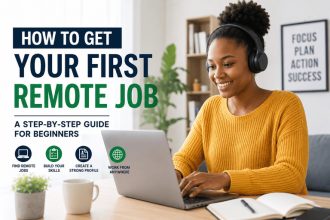
You graduated. You updated your CV. You applied to a dozen local jobs, and either the pay was too low, the office was too far, or nobody replied at all. If that sounds familiar, you are not alone — thousands of graduates across Nigeria, Kenya, Ghana, South Africa, and beyond are asking the same question: how do I actually get a remote job that pays well and doesn’t need a “connection”?
- Quick Answer / Key Takeaways Box
- What “Remote Job” Actually Means in 2026
- Why Remote Work Matters for African Graduates
- Requirements and Qualifications
- Step-by-Step Process to Land a Remote Job
- Realistic Salary and Income Expectations
- Common Mistakes to Avoid
- Frequently Overlooked Opportunities
- Practical Example / Scenario
- Recommended Free Resources
- Frequently Asked Questions (FAQ)
- Final Action Plan (Start Within 24 Hours)
- Conclusion
The good news is that remote work is no longer a foreign dream reserved for a lucky few. Companies around the world now hire talent based on skill, not location. But here’s the catch — the remote job market in 2026 is more competitive and more AI-driven than ever, which means the old “spray and pray” approach to job applications simply doesn’t work anymore.
This guide breaks down exactly how African graduates can find, apply for, and land legitimate remote jobs — step by step, without needing expensive courses or unrealistic promises. By the end, you’ll have a clear action plan you can start today.
Quick Answer / Key Takeaways Box
- Best option: Start with skill-based freelance or entry-level remote roles (customer support, virtual assistance, content writing, data entry, junior tech roles) before targeting full-time remote employment.
- Cost: Can start at $0 using free resources; optional paid certifications range from low-cost to moderate investment.
- Time required: Realistically 1–3 months of consistent effort to land your first paid remote gig.
- Who it is for: Graduates, young professionals, and career changers with basic digital literacy and internet access.
- Biggest mistake to avoid: Applying to hundreds of jobs with the same generic CV instead of tailoring a few applications properly.
What “Remote Job” Actually Means in 2026
A remote job simply means you work for a company or client without being physically present in an office. This includes:
- Full-time remote employment with an international or local company
- Freelancing, where you get paid per project or per hour
- Contract or part-time remote work
- Remote internships, which are increasingly common
Understanding this distinction matters because your search strategy will differ depending on which one you’re targeting.
Why Remote Work Matters for African Graduates
Remote work matters because it removes location as a barrier to opportunity. A graduate in Lagos, Nairobi, or Accra can now be paid in a stronger currency, build an international résumé, and gain experience unavailable in the local job market.
It also matters because AI tools have changed what employers expect. In 2026, most remote employers assume candidates already know how to use basic AI tools to work faster and smarter. This isn’t optional anymore — it’s a baseline expectation, similar to knowing how to use email or spreadsheets.
Requirements and Qualifications
You do not need a foreign degree or years of experience to start. What you typically need is:
- A reliable internet connection and a working laptop or smartphone
- Basic digital literacy (email, video calls, cloud documents)
- At least one marketable skill (writing, design, coding, customer service, bookkeeping, etc.)
- A professional online presence (LinkedIn profile, portfolio, or samples of work)
- Comfort with async communication — replying clearly and promptly in writing
READ: How to Get Your First Remote Job
Step-by-Step Process to Land a Remote Job
STEP 1: Identify Your Marketable Skill
Before applying anywhere, be honest about what you can actually offer. Common entry points for beginners include:
- Virtual assistance
- Customer support / chat support
- Content writing or copywriting
- Graphic design
- Data entry and research
- Basic web development or no-code tools
- Social media management
- Bookkeeping or virtual accounting support
STEP 2: Build Proof, Not Just a CV
Employers want evidence, not promises. Create:
- A simple portfolio (even 2–3 sample projects work)
- A LinkedIn profile with a clear headline and summary
- A short personal website or Google Drive folder, if relevant
STEP 3: Optimize Your CV for Remote Roles
Your CV should highlight:
- Skills over job titles
- Remote-friendly traits: self-discipline, communication, time management
- Quantifiable results (“Increased response rate by 30%” beats “Handled customer queries”)
STEP 4: Search in the Right Places
Instead of scrolling endlessly, search with intention using specific platforms, remote-focused job boards, and niche communities related to your skill (more on this below).
STEP 5: Apply Smart, Not Just Fast
Send fewer, better-tailored applications. A short, honest cover message that mentions the company by name will always beat a copy-pasted generic one.
STEP 6: Prepare for Remote Interviews
Practice explaining how you manage time, communicate updates, and work independently without supervision — this is what remote employers actually screen for.
STEP 7: Start Small, Then Scale
Your first remote role doesn’t have to be your dream job. It has to be your entry point. Many successful remote professionals started with small freelance gigs before moving to full-time contracts.

Realistic Salary and Income Expectations
Remote income varies widely depending on skill level, experience, and client location. Entry-level remote roles typically pay modestly at first, while specialized or in-demand skills (like software development or specialized writing) tend to command higher rates over time. Avoid any platform or “guru” promising fixed guaranteed income — legitimate remote work involves effort, negotiation, and skill growth, just like any career.
Common Mistakes to Avoid
- Applying without tailoring your CV — generic applications rarely get responses.
- Ignoring your online presence — no LinkedIn profile or portfolio makes you look inactive or unprepared.
- Falling for “pay to get hired” scams — legitimate employers do not ask you to pay for training, equipment, or onboarding before you start.
- Underpricing or overpricing your skills without researching what’s fair for your experience level.
- Ignoring time zones and communication expectations, which frustrates clients and employers quickly.
- Giving up after a few rejections instead of refining the approach and trying again.
Frequently Overlooked Opportunities
- Remote internships with international nonprofits and startups, which often accept graduates with little experience
- Contract-based project work, which can turn into long-term roles
- Community-based hiring, where niche Slack, Discord, or Telegram groups post roles before they hit major job boards
- Company career pages directly, which are often less competitive than large job boards
Practical Example / Scenario
Take “Chinaza,” a recent graduate in Nigeria with no prior work experience but decent writing skills. Instead of applying blindly, she spent two weeks building three writing samples, set up a simple LinkedIn profile, and joined two remote-work communities in her niche. She applied to just seven roles — but each application was tailored. Within five weeks, she landed a part-time remote writing contract, which later grew into a steady freelance client base. Her results were not instant, but they were consistent and realistic.
Recommended Free Resources
- General remote job boards that specialize in listing verified remote-only positions
- LinkedIn, for networking, job alerts, and building visibility
- Free online learning platforms (for certifications in digital skills, project management, or specific software tools)
- Government and NGO career portals, which sometimes list remote or hybrid opportunities for graduates
- Niche community groups (Slack, Telegram, Discord) built around specific remote-work skills or industries
- YouTube and free courses for learning in-demand tools without upfront cost
Frequently Asked Questions (FAQ)
1. Can I get a remote job with no experience?
Yes. Many entry-level remote roles value demonstrated skill and reliability over formal experience. Start with small freelance projects to build proof of work.
2. Do I need a degree to work remotely?
Not always. Many remote employers, especially in tech and creative fields, prioritize skills and portfolios over formal qualifications.
3. How do I avoid remote job scams?
Be cautious of any offer that asks you to pay upfront, promises unrealistic income, or avoids video calls or verifiable company information.
4. What skills are most in demand for remote work in 2026?
Digital communication, basic AI tool proficiency, writing, customer support, virtual assistance, and technical skills like web development or data analysis remain consistently in demand.
5. How long does it take to find a remote job?
It varies, but with consistent effort — refining your CV, applying strategically, and networking — most beginners see results within one to three months.
6. Is remote work stable long-term?
It can be, especially if you diversify your income sources or build strong, ongoing client relationships rather than depending on a single gig.
7. Do I need to relocate or get a visa for remote work?
No. Most remote roles do not require relocation, since the entire appeal for employers is hiring talent without location restrictions.
8. Can I combine freelancing with a full-time remote job?
Yes, many professionals do this to diversify income, though it requires careful time management.
Final Action Plan (Start Within 24 Hours)
- Pick one marketable skill and write down three ways you can prove it (samples, past work, or a quick practice project).
- Update your LinkedIn profile and CV to reflect that skill clearly, using simple, results-focused language.
- Apply to two remote roles today using a short, personalized message — not a copy-paste application.
Conclusion
Landing a remote job as an African graduate in 2026 is absolutely possible — but it takes strategy, not luck. The graduates who succeed are not necessarily the most qualified on paper; they are the ones who show up prepared, apply thoughtfully, and keep improving after every rejection.
Start small, stay consistent, and treat your job search like a skill you’re building — because it is one. Every application you tailor and every skill you sharpen brings you closer to that first offer. Keep exploring more practical career, scholarship, and business guides on LeverageHub.net to keep building your path forward, one smart step at a time.
Disclaimer: This article is for general informational and educational purposes only. It does not guarantee employment, income, or acceptance into any program. Readers should conduct their own research and due diligence before applying to any job, platform, or opportunity mentioned or implied in this guide.